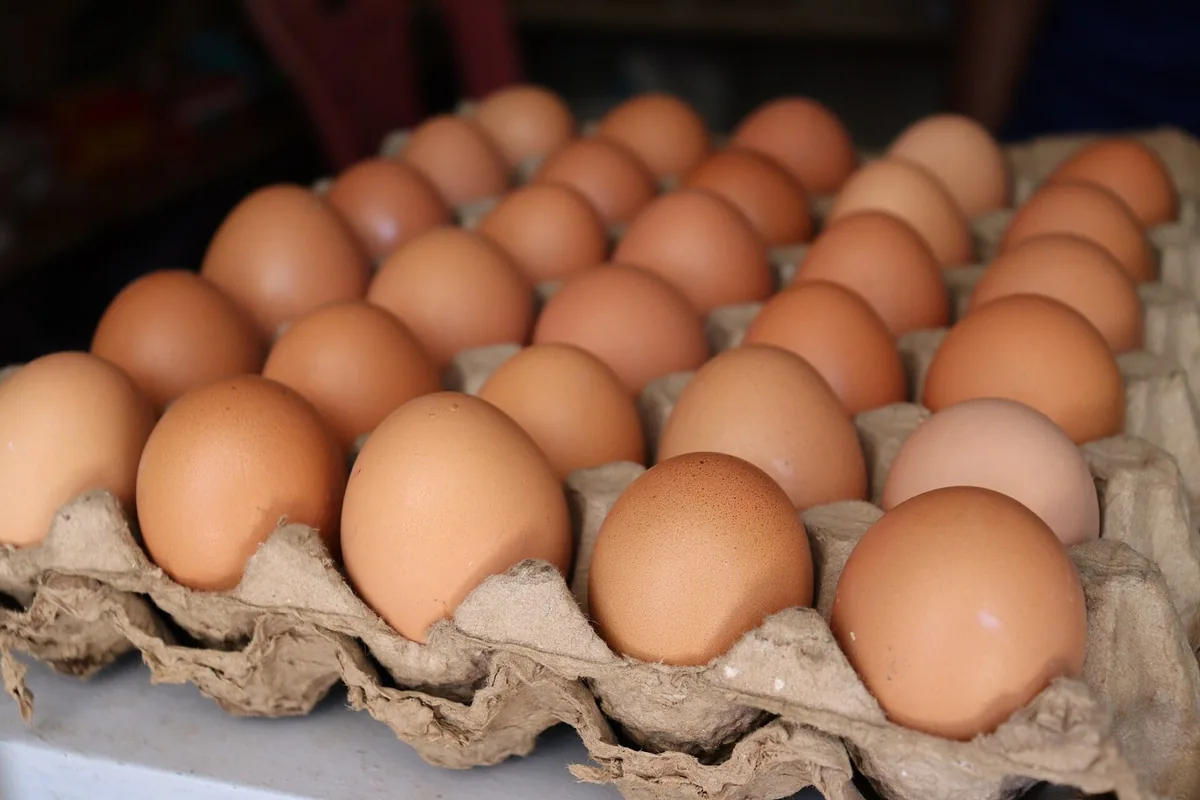
Calories per serving
| Serving | Kcal | P | F | C |
|---|---|---|---|---|
| 1 small egg, 45 g | 71 | 5.7 | 5.2 | 0.3 |
| 1 medium egg, shelled, 55 g | 86 | 7.0 | 6.3 | 0.4 |
| 1 large egg, 62 g | 97 | 7.9 | 7.1 | 0.4 |
| 2 medium eggs, 110 g | 173 | 14.0 | 12.7 | 0.8 |
| 3 medium eggs, 165 g | 259 | 21.0 | 19.0 | 1.2 |
| 100 g | 157 | 12.7 | 11.5 | 0.7 |
Your plate isn't the average one
The table shows average reference values. Take a photo of your plate: we will count the composition, macros and FoodMate Score of exactly your serving. Free, no sign-up, the photo is not stored.
Drop a food photo here
Or choose a file from your computer. A regular top-down photo of the plate in daylight works best.
FoodMate Score of the food
This is a score for the food on its own, by its composition per 100 g, using the same formula the app applies to a meal. On a plate with other foods the result will differ: buckwheat with vegetables scores higher than buckwheat alone.
How it changes with different cooking methods
| Version | Serving |
|---|---|
| Raw | 86 kcal |
| Hard- or soft-boiled | 86 kcal |
| Fried in oil | 120 kcal |
| White of one egg | 16 kcal |
| Yolk of one egg | 63 kcal |
Micronutrients
Values for a standard serving, as a percentage of the daily value for an adult.
| Nutrient | Per serving | % DV |
|---|---|---|
| Choline | 162 mg | 32% |
| Selenium | 16.9 mcg | 24% |
| Vitamin B12 | 0.5 mcg | 17% |
| Vitamin B2 | 0.3 mg | 17% |
| Vitamin D | 1.1 mcg | 7% |
How many calories are in one egg
It depends on the size. A medium egg weighs about 55 g without the shell, which is 86 kcal. A small one is about 70 kcal, a large one 97, an extra large one over 100. 100 g of shelled eggs have 157 kcal: 12.7 g of protein, 11.5 g of fat and less than a gram of carbs. The shell makes up 10-12% of the egg, so it is better to count by the shelled weight.
2 and 3 eggs: calories for breakfast
Two medium eggs are 173 kcal and 14 g of protein, three are 259 kcal and 21 g of protein. That is not much for breakfast, and the protein keeps you full until lunch. Calories grow not from the number of eggs but from what goes with them: oil in the pan adds 40-90 kcal, bacon and cheese another 150-200. Two eggs fried in oil usually come to 240-260 kcal.
Boiled, fried and raw egg
Boiling does not change the calories: in its shell the egg loses nothing and absorbs nothing, so hard- and soft-boiled eggs are the same 86 kcal each. A fried egg is heavier because of the oil: about 4 g stays in it, giving around 120 kcal. If you fry it in a non-stick pan without oil or poach it, the number stays the same as raw.
Calories in egg white and yolk
The white and the yolk are very different. The white of one egg weighs about 36 g and gives only 16 kcal: almost pure protein with no fat. The yolk is lighter, about 18 g, but has 63 kcal, all the fat of the egg, plus choline and vitamins D, A and B12. An egg-white omelet is almost five times lighter, but loses most of the vitamins. For most people there is no point in throwing away yolks: a whole egg has a good balance of protein and fat.
How to count your serving
Check the egg size on the pack and multiply by the number of eggs: medium is 86 kcal, large is 97. Add the cooking oil separately. If your plate has eggs with bacon, toast and vegetables, take a photo in MyFoodMate AI: the app counts the calories of the whole breakfast.