Contents
Why calorie tables are off for home cooking
For an apple or a bag of buckwheat, a calorie table is almost always right, because the product is the same in every shop. Cooked dishes are another matter. One table says borscht has 50 kcal per 100 g and another says 90, and both can be true, since the people who measured them simply made different borscht.
Three things make the difference. The first is the meat and the broth: borscht made on pork ribs and borscht made with lean beef differ almost twofold. The second is oil, because a tablespoon of vegetable oil has about 150 kcal, and one cook fries the vegetables in one spoonful while another uses three. The third is proportions, since a plov with twice as much rice as meat and the festive plov someone makes for guests are really two different dishes.
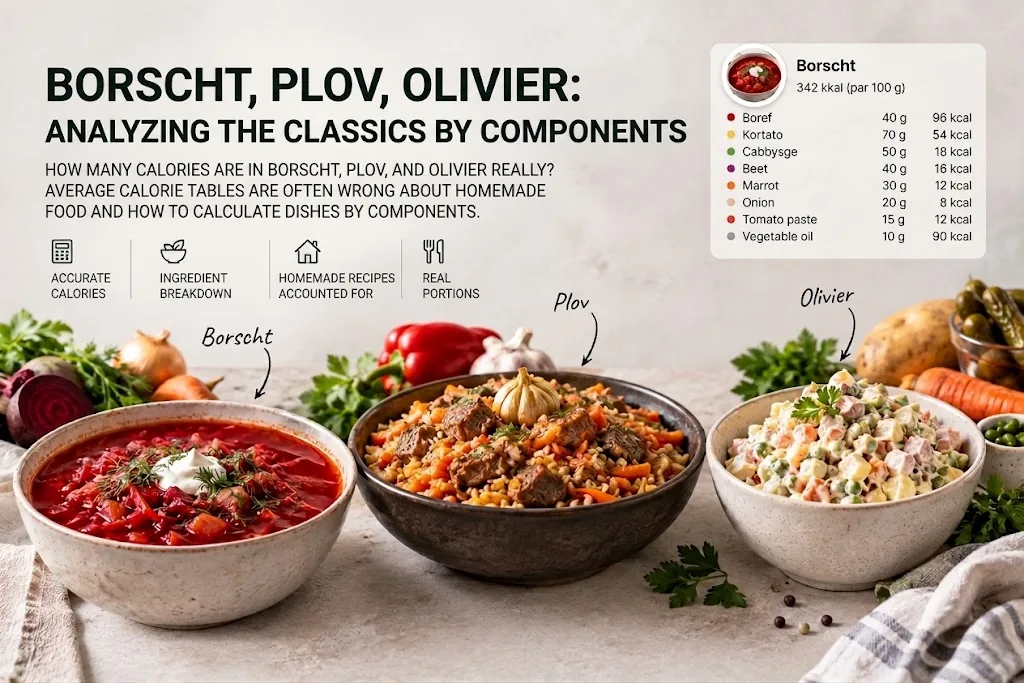
So it's more accurate to count a dish by what went into it rather than as a whole. Below are three dishes you'll find in almost any kitchen in Russia and the former Soviet countries, taken apart that way.
Borscht: 91 kcal per 100 g
The beef borscht in our catalog comes as a 350 g plate with 320 kcal, and this is where they come from:
| Component | Weight | kcal |
|---|---|---|
| Beef broth | 180 g | 58 |
| Beetroot, cabbage, potatoes | 120 g | 76 |
| Beef | 55 g | 121 |
| Sour cream 15% | 15 g | 31 |
| Frying oil | 5 g | 34 |
| Total | 375 g | 320 |
The meat gives more than a third of those calories and the oil another tenth, while the vegetables, which fill a third of the plate, bring in less than a quarter.
Extra calories usually arrive with what you add to the bowl. A tablespoon of 20% sour cream instead of a teaspoon adds 50 kcal, fatty pork instead of beef adds 100-150 kcal, and a slice of bread with salo on the side adds 250. The soup itself is one of the most balanced dishes in Russian cooking, with a FoodMate Score of 82 and plenty of fiber and vegetables.
Plov: 171 kcal per 100 g
A 340 g plate of beef plov has 581 kcal:
| Component | Weight | kcal |
|---|---|---|
| Boiled rice | 180 g | 234 |
| Stewed beef | 90 g | 198 |
| Carrots and onions | 60 g | 58 |
| Vegetable oil | 12 g | 92 |
| Total | 342 g | 582 |
That's a home-style plov cooked with a moderate amount of oil. A traditional recipe calls for 200-300 ml of oil and fatty lamb for a kazan with 1 kg of rice, and then a serving easily reaches 800-900 kcal, half as much again, with nearly all the difference coming from the oil.
Olivier salad: 160-200 kcal per 100 g
Olivier salad varies more than anything else on the table. Here is a classic homemade version with boiled sausage and 67% mayonnaise, in a 360 g serving:
| Component | Weight | kcal |
|---|---|---|
| Boiled potatoes | 100 g | 77 |
| Boiled sausage | 60 g | 155 |
| Eggs | 50 g | 78 |
| Canned peas | 40 g | 22 |
| Pickled cucumbers | 40 g | 5 |
| Boiled carrots | 30 g | 10 |
| Mayonnaise 67% | 40 g | 250 |
| Total | 360 g | 597 |
That works out to about 166 kcal per 100 g, and 40% of the calories come from the mayonnaise, with another quarter from the sausage. The potatoes everyone blames contribute only 13%.
If you replace half the mayonnaise with Greek yogurt, a serving loses about 110 kcal, and boiled chicken instead of sausage takes off roughly 60 more along with a good deal of salt. At a New Year's table hardly anyone notices, especially if the yogurt is a thick 5% one.
How to count your own dish
The easiest moment to weigh the ingredients is when they go into the pot raw. Be careful with meat, oil, mayonnaise and sour cream, while vegetables can be estimated, since an extra 50 g of cabbage is only 15 kcal. Add up the calories of everything, put the finished dish on the scales without the pot and divide one by the other, and you get calories per 100 g of your own borscht rather than the one in the table.
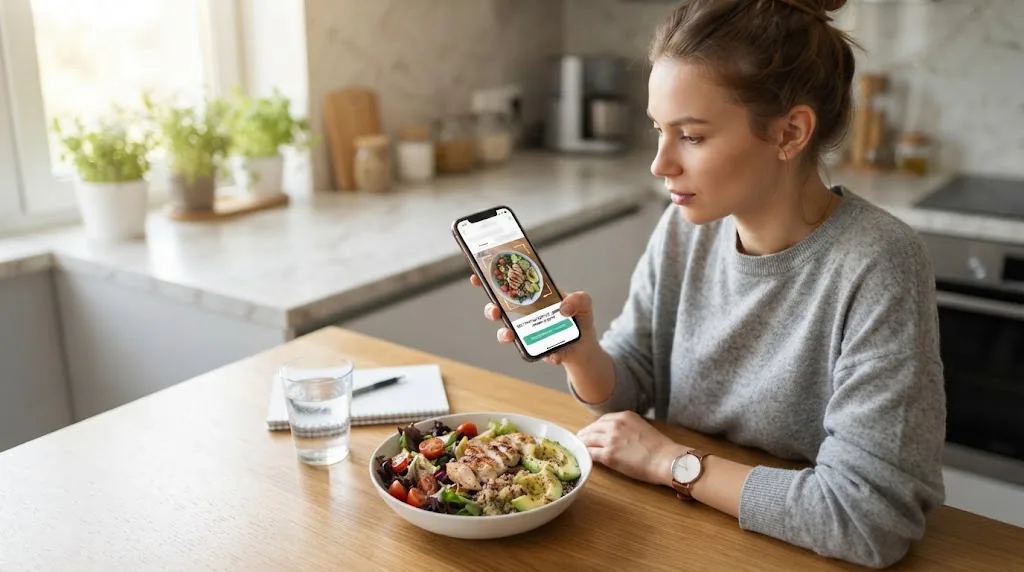
If you'd rather not weigh every carrot, take a photo of your plate. MyFoodMate AI splits the dish into meat, side, sauce and oil and counts the calories of your serving, and you can correct the grams of any part afterwards. You can try it for free on the home page or on a dish page in the calorie catalog.
The bottom line
The "50 kcal" and "90 kcal" from the two tables at the start of this article really describe two different pots. In borscht the calories come from meat and sour cream, in plov from oil and rice, and in Olivier salad from mayonnaise and sausage, and the recipe can shift the number by a factor of 1.5-2. So if you count home cooking, at least measure the oil and the sauces with a spoon, because they are the hardest to spot on the plate and carry the most calories.

We check blog materials against current WHO recommendations.