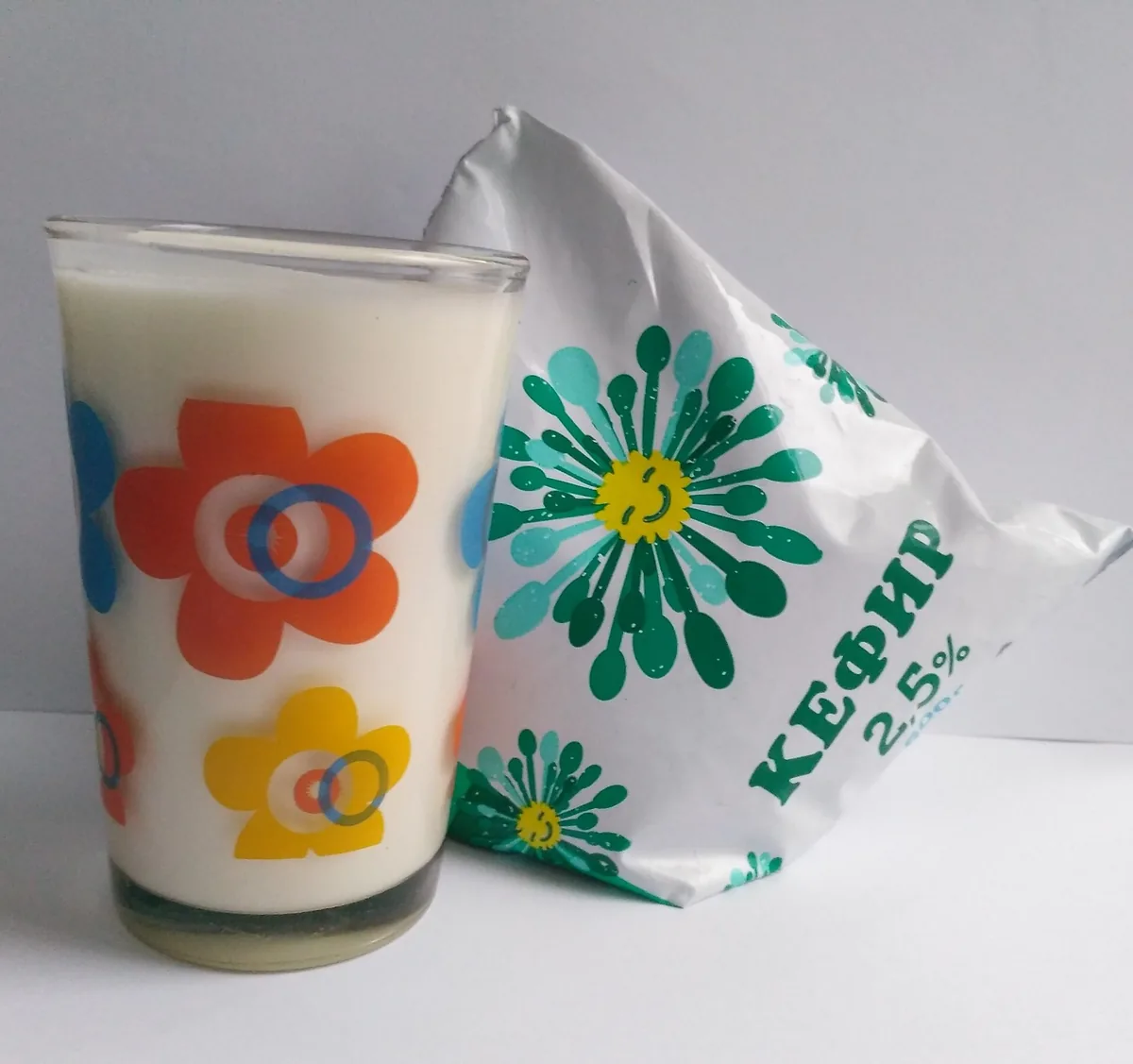
Calories per serving
| Serving | Kcal | P | F | C |
|---|---|---|---|---|
| 100 g | 53 | 2.9 | 2.5 | 4.0 |
| 200 ml glass, 206 g | 109 | 6.0 | 5.2 | 8.2 |
| 250 ml glass, 258 g | 137 | 7.5 | 6.5 | 10.3 |
| 900 g bottle | 477 | 26.1 | 22.5 | 36.0 |
Your plate isn't the average one
The table shows average reference values. Take a photo of your plate: we will count the composition, macros and FoodMate Score of exactly your serving. Free, no sign-up, the photo is not stored.
Drop a food photo here
Or choose a file from your computer. A regular top-down photo of the plate in daylight works best.
FoodMate Score of the food
This is a score for the food on its own, by its composition per 100 g, using the same formula the app applies to a meal. On a plate with other foods the result will differ: buckwheat with vegetables scores higher than buckwheat alone.
How it changes with different cooking methods
| Version | Serving |
|---|---|
| Kefir 2.5% | 137 kcal |
| Kefir 1% | 103 kcal |
| Fat-free, 0-0.5% | 80 kcal |
| Kefir 3.2% | 152 kcal |
| 2.5% glass with a teaspoon of honey | 169 kcal |
Micronutrients
Values for a standard serving, as a percentage of the daily value for an adult.
| Nutrient | Per serving | % DV |
|---|---|---|
| Calcium | 310 mg | 31% |
| Phosphorus | 245 mg | 35% |
| Vitamin B12 | 1 mcg | 33% |
| Vitamin B2 | 0.4 mg | 22% |
How many calories are in kefir
2.5% kefir has 53 kcal per 100 g: 2.9 g of protein, 2.5 g of fat and 4 g of carbs, mostly milk sugar. Kefir is slightly heavier than water: a 200 ml glass weighs about 206 g and a 250 ml one about 258 g. That gives 109 and 137 kcal. A 900 g bottle comes to 477 kcal, almost a full lunch if you drink it in a day.
Kefir 1%, 2.5% and 3.2%: which to choose
Kefir calories depend on fat, while all types have about 3 g of protein per 100 g. Fat-free is about 31 kcal, 1% is 40, 2.5% is 53, 3.2% is 59. A 250 ml glass of 1% comes to 103 kcal, of 3.2% to 152. A 50 kcal difference per glass barely matters for one meal, but if you drink kefir daily, it adds up to 350 kcal a week. Fat-free kefir is less filling and tastes more sour.
Kefir at night and for weight loss
A glass of kefir is a handy light snack or late dinner: 110-140 kcal, 6-8 g of protein and a third of the daily calcium. Liquid food is less filling than solid food, so kefir holds off hunger better with a spoon of bran, some berries or a slice of whole grain bread. Kefir-only fasting days show a quick drop on the scale, but mostly through an overall calorie deficit, and the weight comes back afterwards.
Kefir with sugar, honey and fruit
Plain kefir is not sweet, and people often sweeten it. A teaspoon of honey adds 32 kcal, a teaspoon of sugar about 30, a banana in a smoothie another 115. Drinking yogurts and flavored kefirs usually have 8-12 g of sugar per 100 g and come to 80-100 kcal, almost twice as much as plain kefir.
How to count your serving
Check the fat level on the pack and multiply the volume in milliliters by 1.03 to get grams, then by the number from the table. If the kefir is in a smoothie with fruit and oats, take a photo of the glass in MyFoodMate AI and the app counts everything together.