Contents
Why protein matters when you already count calories
Protein is the building material for muscle, skin, enzymes and immune cells. Unlike fat and carbohydrates, the body barely stores it, so you need it every day.
For people watching their weight, protein has two more important properties. It is more filling than other nutrients - after a high-protein lunch you stay full longer. And it protects muscle in a calorie deficit: without enough protein, part of the weight you lose comes from muscle rather than fat.
How much protein do you need per day?
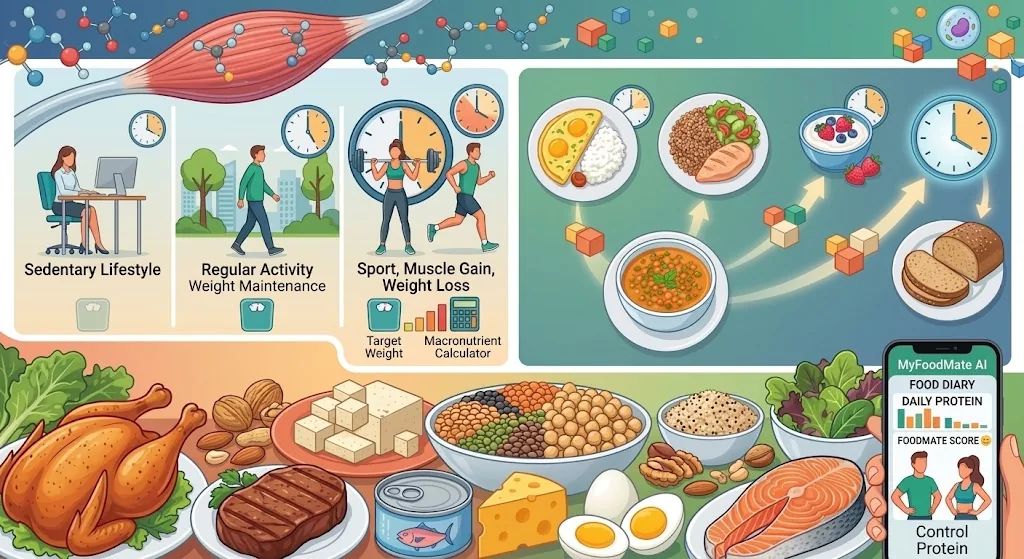
Protein needs are calculated per kilogram of body weight and depend on your lifestyle and goal.
| Situation | Protein, g per kg of body weight |
|---|---|
| Minimum for a sedentary adult | 0.8 |
| Normal activity, weight maintenance | 1.0-1.2 |
| Weight loss (calorie deficit) | 1.6-2.0 |
| Strength training, muscle gain | 1.6-2.2 |
| Over 65 | 1.0-1.2 and above |
0.8 g/kg is the minimum that prevents deficiency, not the optimal amount. That is why our macro calculator warns you if protein falls below 1.2 g per kg.
Example. A woman weighing 63 kg is losing weight: 63 × 1.6 = 100 g of protein a day. A man weighing 80 kg lifts three times a week: 80 × 1.8 = 144 g.
How to spread protein across the day
Muscles make better use of protein when it comes in several portions rather than one large one. A practical target is 20-40 g of protein at each main meal.
A typical mistake is almost no protein at breakfast (porridge, a sandwich, coffee), a little at lunch and most of it at dinner. Move some protein to the morning, and hitting your target becomes much easier.
Table: protein content in foods
| Food, 100 g | Protein | kcal |
|---|---|---|
| Chicken breast, boiled | 29 g | 150 |
| Beef, stewed | 25 g | 220 |
| Tuna in water, canned | 23 g | 96 |
| Pollock, baked | 17 g | 80 |
| Cottage cheese 5% | 17 g | 121 |
| Hard cheese | 24 g | 360 |
| Eggs (2 pcs) | 13 g | 157 |
| Greek yogurt 2% | 10 g | 73 |
| Lentils, boiled | 9 g | 116 |
| Chickpeas, boiled | 9 g | 164 |
| Tofu | 12 g | 110 |
| Buckwheat, boiled | 3.4 g | 92 |
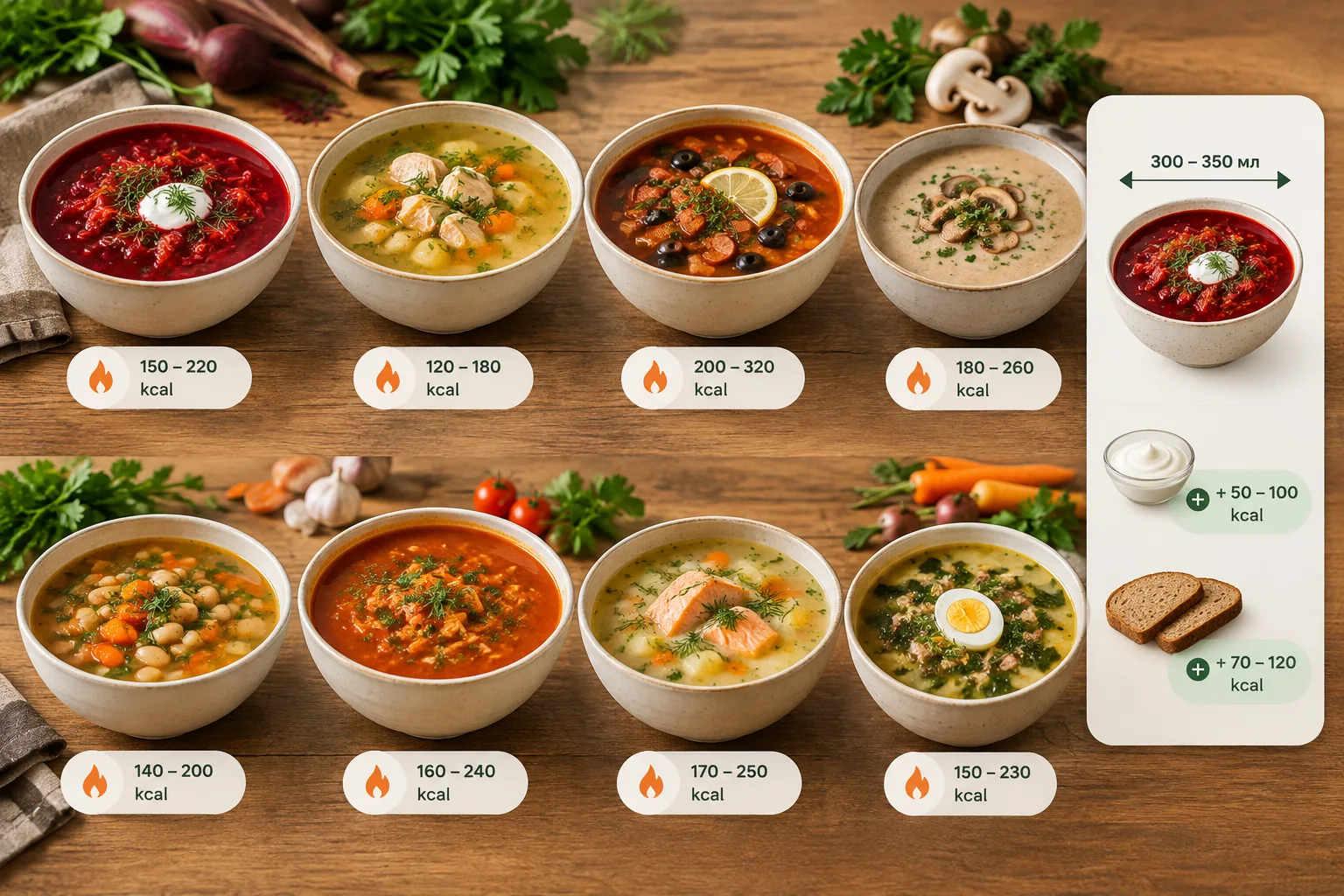
Lean meat, fish, cottage cheese and yogurt give the most protein per calorie. Legumes have less of it, but the protein comes with fiber, and that pairing is rare, which is why a bowl of lentil soup is often a better deal than a piece of cheese with the same protein.
Sample menu with 110 g of protein
This menu is built for the 63 kg woman from the example above, who needs about 100 g of protein, with a little to spare:
| Meal | What to eat | Protein |
|---|---|---|
| Breakfast | 2-egg omelette + 150 g cottage cheese 5% | 38 g |
| Lunch | 150 g buckwheat + 120 g chicken breast + salad | 40 g |
| Snack | 150 g Greek yogurt | 15 g |
| Dinner | 300 g lentil soup + bread | 17 g |
Is plant protein enough?
In 1971 Frances Moore Lappé's bestseller Diet for a Small Planet told vegetarians to match beans with grains at every single meal, and in the 1981 edition she walked it back. The body pools amino acids over the whole day, so if your menu is varied, rice at lunch and lentils at dinner do the job just as well as rice and lentils on one plate. Because plant protein is absorbed a little less well, vegetarians should still add roughly 10-20% to the top of the range.
Common mistakes
Plenty of people who are sure they eat enough protein have never actually counted it. A 100 g piece of chicken is about the size of your palm without the fingers, and a chicken Caesar in a café often has just 50-70 g of meat. Then there's the mix-up between the weight of the food and the weight of the protein, as 100 g of beef holds 20-30 g of protein rather than 100. Sausages and hot dogs pass for protein food but give only 10-13 g per 100 g with more than 20 g of fat, and many protein bars have as much sugar and as many calories as a Snickers.
If you have kidney disease, your protein intake should be set by a doctor, because high-protein diets can do harm, and the numbers in the table above don't apply to you.
How to check whether you get enough protein
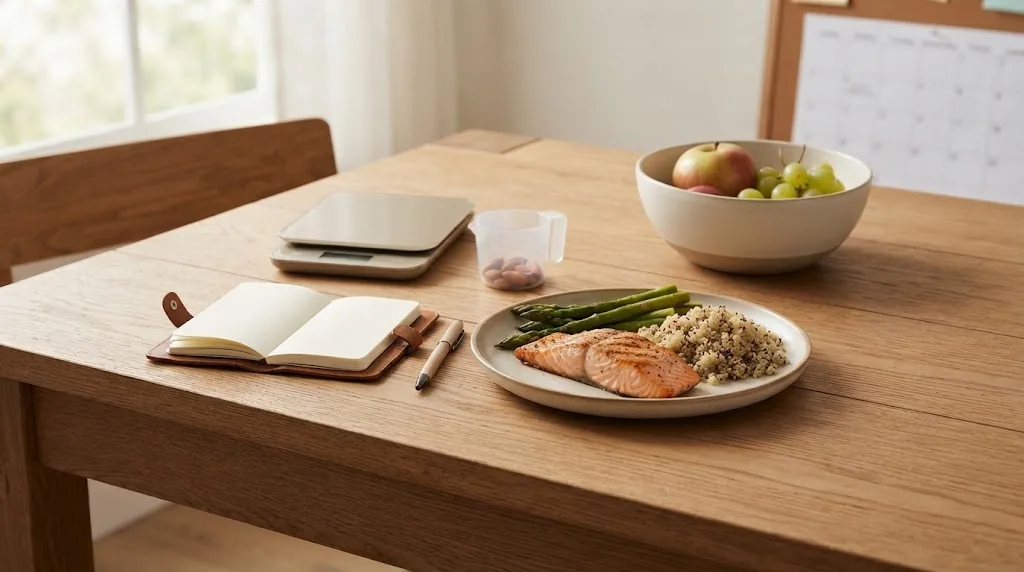
It's easiest to look at a whole week in your diary rather than at one good day. Photograph your food in MyFoodMate AI, the bot counts the protein on each plate, and the diary shows your daily average. Protein is also part of the FoodMate Score, so if you're short, the score tells you what to add.
The bottom line
The answer to the question at the top, 0.8, 1.2 or 2 grams, depends on who is asking. 0.8 g per kilogram is enough to avoid deficiency, an active person needs about 1.2 g, and someone losing weight or lifting needs 1.6-2.2 g. The easiest way to get there is 20-40 g at each main meal from chicken, fish, eggs, cottage cheese, yogurt and legumes, rather than one big dinner.

We check blog materials against current WHO recommendations.