Contents
The short answer: 150 to 320 kcal per bowl
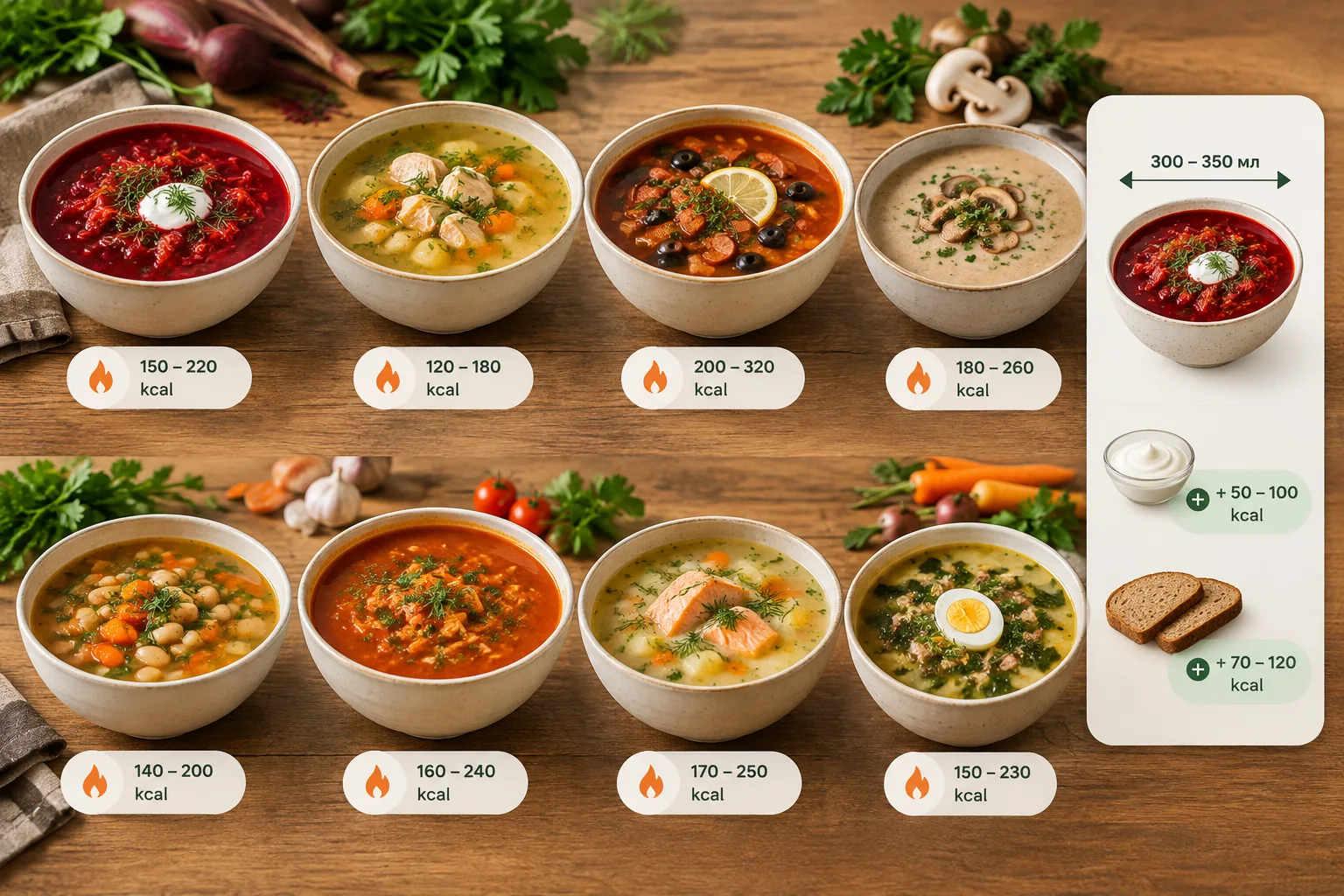
A regular deep soup bowl holds 300-350 ml of soup. If the pot contains shchi (Russian cabbage soup), fish soup or chicken noodle soup, that is 150-190 kcal. Borscht with beef, solyanka and smoked pea soup land at 230-320 kcal. The lightest options are broths and vegetable soups without a fried base: 50-120 kcal per bowl.
The difference between soups comes down to three things: fatty meat, the vegetables fried in oil at the start, and what goes into the bowl on top. More on that below, numbers first.
Table: calories in a bowl of soup
A bowl in the table is 350 g unless stated otherwise. For soups in our catalog the figures are calculated from a typical recipe; for the rest they come from the Skurikhin food composition tables and averaged home recipes.
| Soup | kcal per 100 g | kcal per bowl |
|---|---|---|
| Chicken broth | 15-20 | 50-70 |
| Green borscht with sorrel | 45 | 158 |
| Ukha, river fish soup | 46 | 161 |
| Shchi, fresh cabbage soup with beef | 49 | 172 |
| Mushroom soup | 30-40 | 105-140 |
| Chicken noodle soup | 45-55 | 160-190 |
| Meatball soup | 45-55 | 160-190 |
| Rassolnik, pickle soup | 55 | 193 |
| Tom yum with shrimp, 400 g bowl | 56 | 224 |
| Okroshka with kvass | 62 | 217 |
| Kharcho with beef | 71 | 249 |
| Mixed meat solyanka, 300 g bowl | 77 | 231 |
| Pea soup with smoked meat | 70-80 | 245-280 |
| Cream of pumpkin soup | 60-80 | 210-280 |
| Borscht with beef | 91 | 319 |
Catalog pages: Borscht with beef.
Borscht tops the list, and not because of the beetroot. A typical recipe uses fatty beef on the bone and vegetables fried in oil. Meatless borscht on vegetable stock is about 40-50 kcal per 100 g, or 150-170 kcal per bowl.
What a "bowl" means and why everyone's is different
A deep soup bowl holds 500-600 ml filled to the brim. Nobody eats it that way, so a normal serving is 300-350 ml. If you serve with a ladle, a standard ladle holds 100-150 ml, so two full ladles are roughly one bowl.
To learn your own serving once, pour soup into your usual bowl and put it on kitchen scales. After that you can stop weighing: for most people a soup serving barely changes from day to day.
What sour cream, bread and mayo add
The soup itself is rarely the main source of calories at lunch. What goes with it can easily equal half the bowl.
| Addition | Amount | kcal |
|---|---|---|
| Sour cream 15% | tablespoon, 25 g | 40 |
| Sour cream 20% | tablespoon, 25 g | 52 |
| Mayonnaise 67% | tablespoon, 16 g | 100 |
| Rye bread | slice, 30 g | 54 |
| White bread | slice, 30 g | 74 |
| Salo (cured pork fat) | slice, 10 g | 77-80 |
| Garlic bun (pampushka) | 1 piece, 40-50 g | 140-170 |
A typical Russian lunch of a bowl of borscht, a spoon of sour cream and two slices of rye bread comes to 319 + 40 + 108 = about 470 kcal. Without the bread and with one spoon of sour cream it is about 360.
How to make soup lighter without ruining it
- Skim the fat off cooled broth. Cold fat sets on top in a layer that comes off easily with a spoon. In meat soups that saves 30-60 kcal per bowl.
- Stew the base instead of frying it. Onion and carrot can be softened in a couple of spoons of broth. One tablespoon of sunflower oil is 135 kcal for the whole pot, but a fried base often takes three or four.
- Choose lean meat. Boneless beef and skinless chicken make a much lighter broth than brisket or pork ribs.
- Sour cream goes in the bowl, not the pot. That way you see how much you add, and one spoon is easier to stick to.
How to count your bowl, not an average one
Table figures describe an average recipe. If you cook soup yourself and want more precision, add up the calories of everything in the pot, weigh the finished soup and divide. You get kcal per 100 g of your own soup, then multiply by the weight of the bowl. We walked through this method in Borscht, plov, olivier: calories by component.
If you would rather not calculate by hand, take a photo of the soup: MyFoodMate AI recognises the dish and suggests a normal bowl. Sour cream, bread or "double portion" can be added in words, without searching a database.
Soup when losing weight: does it help
Soup gives you a lot of food for a moderate number of calories. A bowl of shchi or fish soup weighs 350 g and has about as many calories as one and a half syrniki, the fried cottage cheese pancakes, and the liquid and vegetables fill the stomach, so you feel full sooner. Back in 2007 Barbara Rolls at Penn State found that people who started lunch with a bowl of vegetable soup ate about a fifth fewer calories over the whole meal. So soup at lunch is a perfectly good habit if you're keeping a calorie deficit.
The catch is what comes with it. A bowl of light soup with three slices of bread, sour cream and a few slices of salo easily reaches 600 kcal, and the soup isn't to blame, it simply arrived with a second lunch attached.

We check blog materials against current WHO recommendations.