Calories per serving
| Serving | Kcal | P | F | C |
|---|---|---|---|---|
| One grape, 5 g | 4 | 0.0 | 0.0 | 0.8 |
| Handful (about 20 grapes), 100 g | 72 | 0.6 | 0.6 | 15.4 |
| Bowl serving, 150 g | 108 | 0.9 | 0.9 | 23.1 |
| Bunch, 400 g | 288 | 2.4 | 2.4 | 61.6 |
Your plate isn't the average one
The table shows average reference values. Take a photo of your plate: we will count the composition, macros and FoodMate Score of exactly your serving. Free, no sign-up, the photo is not stored.
Drop a food photo here
Or choose a file from your computer. A regular top-down photo of the plate in daylight works best.
FoodMate Score of the food
This is a score for the food on its own, by its composition per 100 g, using the same formula the app applies to a meal. On a plate with other foods the result will differ: buckwheat with vegetables scores higher than buckwheat alone.
How it changes with different cooking methods
| Version | Serving |
|---|---|
| Green or white | 108 kcal |
| Black or red | 108 kcal |
| Seedless (kishmish) | 112 kcal |
| Grape juice, 200 ml glass | 120 kcal |
Micronutrients
Values for a standard serving, as a percentage of the daily value for an adult.
| Nutrient | Per serving | % DV |
|---|---|---|
| Vitamin K | 21.9 mcg | 18% |
| Copper | 0.2 mg | 20% |
| Potassium | 338 mg | 10% |
How many calories are in grapes
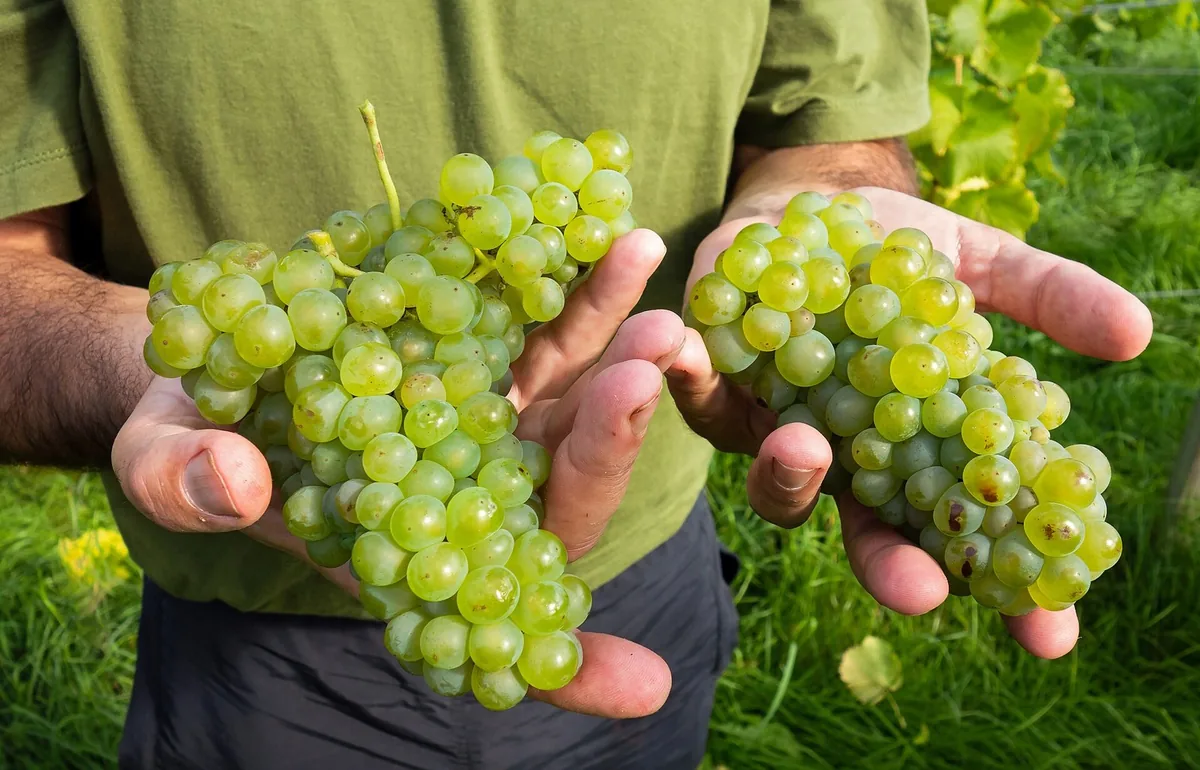
Grapes have 72 kcal per 100 g: about 15 g of carbs, mostly glucose and fructose, and very little protein, fat or fiber. One medium grape weighs 4-6 g and gives about 4 kcal, a handful of 20 about 72, a 150 g bowl 108. A 400 g bunch comes to 288 kcal, like a plate of pasta.
Green, dark and seedless
Grape color barely affects calories: white, pink and dark varieties fall within 65-75 kcal per 100 g. Seedless kishmish is usually a bit sweeter, about 75. Dark grapes have more anthocyanins, which give the color, and slightly more vitamins, but in calories they are the same fruit. Raisins are a different food, about 264 kcal per 100 g.
Grape juice
A glass of grape juice is about 120 kcal: the juice of roughly 250 g of grapes, but without fiber and skin, so it barely fills you up. In sugar, the juice is closer to soda than to fruit. If you want the taste of grapes, a handful of berries is the better choice.
Grapes for weight loss
Grapes are not off-limits on a diet, but they are worth measuring. The berries are small and sweet and get eaten without thinking, and a bowl in front of the TV easily becomes 300-400 kcal. It helps to pull off a handful and put the rest away. Frozen grapes are eaten slowly, like sorbet, and you eat fewer of them.
How to count your serving
Weigh the grapes without the stems and multiply by 0.72, or count 4 kcal per grape. If the grapes are on a cheese board or in a salad, take a photo in MyFoodMate AI and the app counts everything together.