Calories per serving
| Serving | Kcal | P | F | C |
|---|---|---|---|---|
| Tablespoon, 15 g | 8 | 0.4 | 0.4 | 0.7 |
| In coffee, 50 ml, 52 g | 27 | 1.5 | 1.3 | 2.4 |
| 100 g | 52 | 2.8 | 2.5 | 4.7 |
| 200 ml glass, 206 g | 107 | 5.8 | 5.2 | 9.7 |
| 250 ml glass, 258 g | 134 | 7.2 | 6.5 | 12.1 |
| One liter, 1030 g | 536 | 28.8 | 25.8 | 48.4 |
Your plate isn't the average one
The table shows average reference values. Take a photo of your plate: we will count the composition, macros and FoodMate Score of exactly your serving. Free, no sign-up, the photo is not stored.
Drop a food photo here
Or choose a file from your computer. A regular top-down photo of the plate in daylight works best.
FoodMate Score of the food
This is a score for the food on its own, by its composition per 100 g, using the same formula the app applies to a meal. On a plate with other foods the result will differ: buckwheat with vegetables scores higher than buckwheat alone.
How it changes with different cooking methods
| Version | Serving |
|---|---|
| Milk 2.5% | 134 kcal |
| Milk 1.5% | 114 kcal |
| Skimmed, 0.5% | 90 kcal |
| Milk 3.2% | 152 kcal |
| 2.5% glass with a teaspoon of sugar | 162 kcal |
| Coffee with milk: 200 ml coffee and 50 ml milk | 31 kcal |
Micronutrients
Values for a standard serving, as a percentage of the daily value for an adult.
| Nutrient | Per serving | % DV |
|---|---|---|
| Calcium | 310 mg | 31% |
| Phosphorus | 232 mg | 33% |
| Vitamin B12 | 1 mcg | 33% |
| Vitamin B2 | 0.4 mg | 22% |
How many calories are in milk
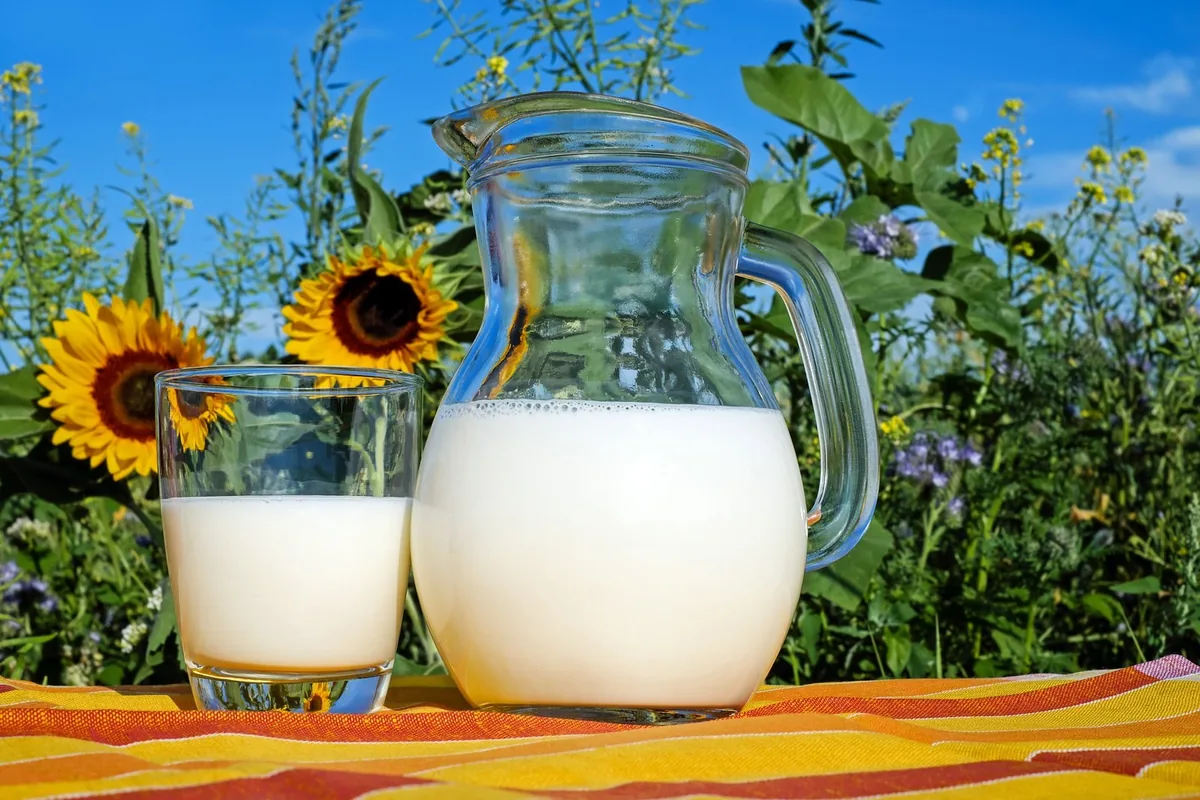
2.5% milk has 52 kcal per 100 g: 2.8 g of protein, 2.5 g of fat and 4.7 g of milk sugar. Milk is slightly heavier than water, and a 250 ml glass weighs about 258 g, giving 134 kcal. A 200 ml glass is 107 kcal, a liter is 536 kcal. For comparison, a liter of milk a day is a quarter of an average person's daily calories.
Milk 1.5%, 2.5% and 3.2%
Milk calories rise with fat, while all types have about 3 g of protein per 100 g. Skimmed is 35 kcal, 1.5% is 44, 2.5% is 52, 3.2% is 59, farm milk of 4-6% is 65-80. A 250 ml glass of skimmed milk comes to 90 kcal, of 3.2% to 152. If you drink milk often, switching from 3.2% to 1.5% saves about 40 kcal per glass.
Milk with sugar and coffee with milk
A teaspoon of sugar weighs 5-8 g and adds about 28 kcal, so a glass of sweetened milk comes to about 162 kcal. A cup of coffee usually gets 30-50 ml of milk, that is 16-27 kcal, while black coffee itself gives only 2-4. A 300 ml cappuccino in a coffee shop is about 110-130 kcal, a latte 150-190, because it has more milk than coffee.
Milk for weight loss
Milk does not stop weight loss if you count it: a glass gives 134 kcal, 7 g of protein and almost a third of the daily calcium. It gets worse when milk does not count: in coffee several times a day, in porridge, in tea, and 200-300 kcal quietly add up. Liquid calories are less filling than solid food, so a glass of milk works better with a meal than instead of one.
How to count your serving
Multiply the volume in milliliters by 1.03 to get grams, then by the number for your fat level. If the milk is in porridge or coffee, take a photo of the cup or bowl in MyFoodMate AI and the app counts everything together.