Calories per serving
| Serving | Kcal | P | F | C |
|---|---|---|---|---|
| Tablespoon of flakes, 12 g | 42 | 1.5 | 0.7 | 7.4 |
| Breakfast serving, 40 g | 141 | 4.9 | 2.5 | 24.7 |
| Large serving, 60 g | 211 | 7.4 | 3.7 | 37.1 |
| Glass of flakes, 90 g | 317 | 11.1 | 5.6 | 55.6 |
| 100 g | 352 | 12.3 | 6.2 | 61.8 |
Your plate isn't the average one
The table shows average reference values. Take a photo of your plate: we will count the composition, macros and FoodMate Score of exactly your serving. Free, no sign-up, the photo is not stored.
Drop a food photo here
Or choose a file from your computer. A regular top-down photo of the plate in daylight works best.
FoodMate Score of the food
This is a score for the food on its own, by its composition per 100 g, using the same formula the app applies to a meal. On a plate with other foods the result will differ: buckwheat with vegetables scores higher than buckwheat alone.
How it changes with different cooking methods
| Version | Serving |
|---|---|
| Dry flakes, 40 g | 141 kcal |
| Porridge with water (40 g and 160 ml water) | 141 kcal |
| Porridge with 2.5% milk (40 g and 200 ml) | 245 kcal |
| With water and two teaspoons of sugar | 181 kcal |
| With water and half a banana | 199 kcal |
Micronutrients
Values for a standard serving, as a percentage of the daily value for an adult.
| Nutrient | Per serving | % DV |
|---|---|---|
| Manganese | 1.5 mg | 75% |
| Phosphorus | 140 mg | 20% |
| Magnesium | 51.6 mg | 12% |
| Vitamin B1 | 0.2 mg | 13% |
| Iron | 1.4 mg | 10% |
Calories in dry oat flakes
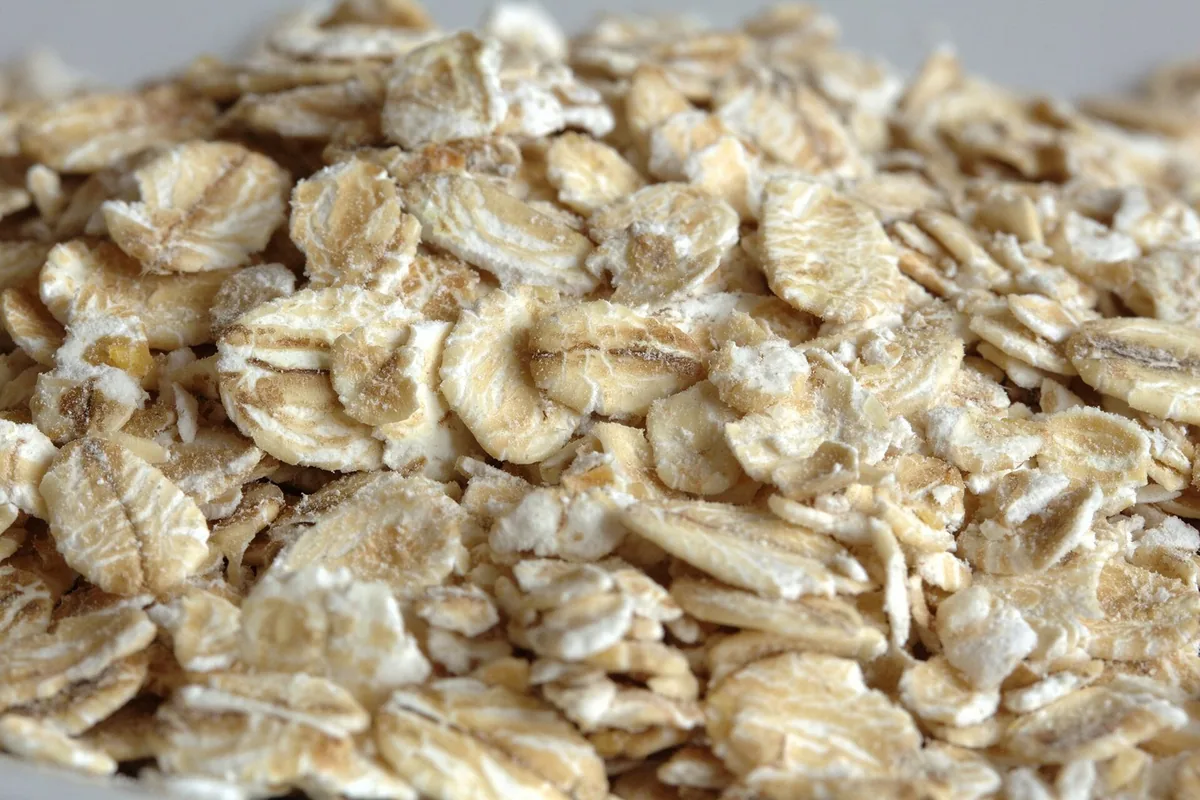
100 g of rolled oat flakes has 352 kcal: 12.3 g of protein, 6.2 g of fat, 62 g of carbs and 6 g of fiber. A usual breakfast serving is 40-50 g of flakes, that is 141-176 kcal. A tablespoon of flakes weighs about 12 g and gives 42 kcal, a 200 ml glass holds about 90 g, which is 317 kcal. Quick oats and whole oat groats are almost the same in calories, the difference is cooking time.
Oatmeal with water and with milk
Water adds no calories, so porridge cooked in water weighs more but has the same calories as the dry flakes. 40 g of flakes and 160 ml of water make about 200 g of porridge, that is 141 kcal, or about 70 kcal per 100 g. If you cook it with 2.5% milk, a glass of milk adds another 104 kcal, and the serving comes to about 245 kcal, or 100 kcal per 100 g of porridge. Milk porridge is more filling thanks to the protein and fat of milk.
Sugar, honey, banana and nuts in porridge
Oatmeal calories usually grow from the toppings. A teaspoon of sugar is about 30 kcal, honey about 32, a 10 g piece of butter 75. Half a banana adds 58 kcal, a 20 g handful of nuts 120-130. Flavored instant oat sachets usually contain sugar, and one 35-40 g sachet comes to 130-160 kcal, almost like plain flakes, but keeps you full for less time.
Oatmeal for weight loss
Oatmeal is a good breakfast in a calorie deficit: a 40 g serving with water gives 141 kcal and almost 2.5 g of fiber, and oat beta-glucan makes the porridge thick and slows digestion. To stay full until lunch, add protein: a spoon of cottage cheese, an egg or Greek yogurt. It is worth weighing the flakes: they are light, and a couple of handfuls easily become 80-90 g.
How to count your serving
Weigh the dry flakes and multiply by 3.52, then count the milk and toppings separately. If the porridge is already in a bowl with fruit and nuts, take a photo in MyFoodMate AI: the app splits breakfast into foods and logs the calories.