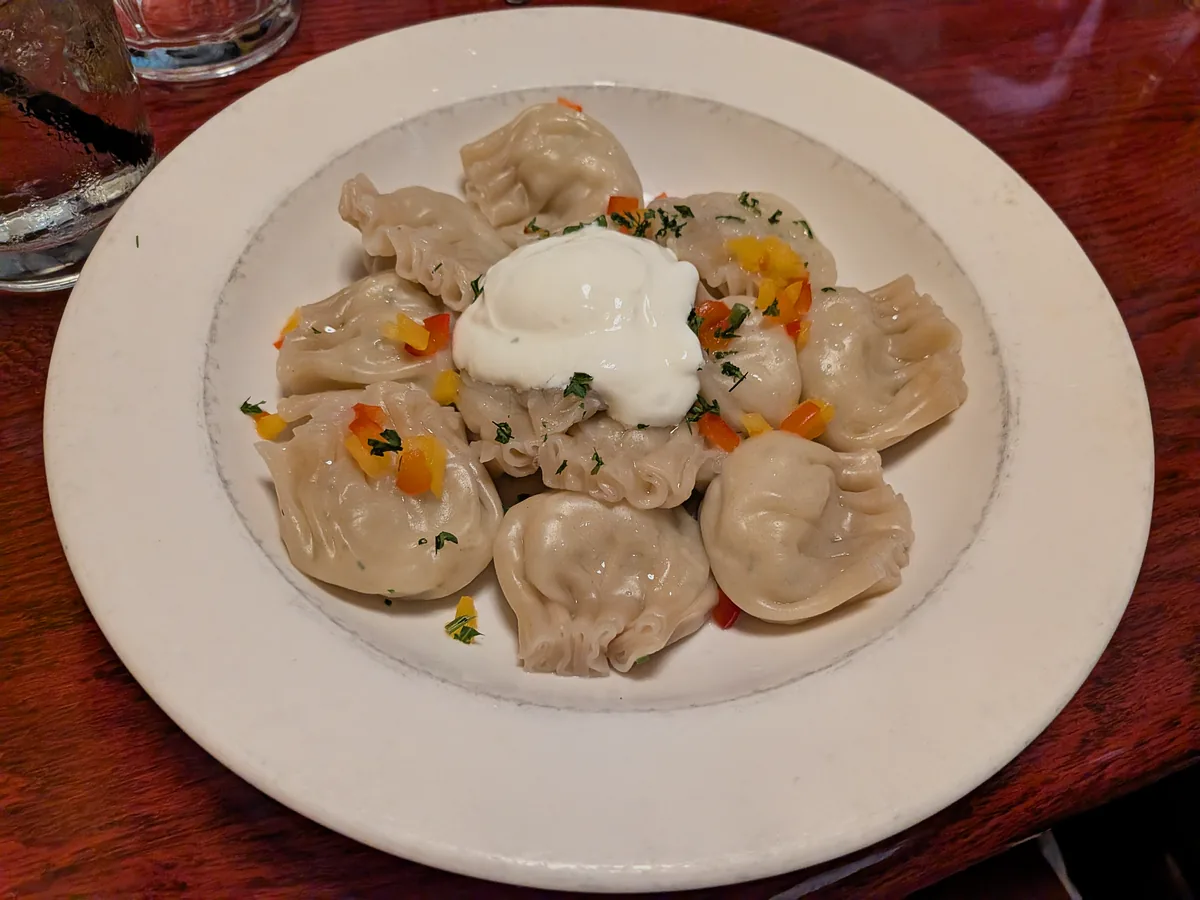
Calories per serving
| Serving | Kcal | P | F | C |
|---|---|---|---|---|
| 100 g | 248 | 11.5 | 12.4 | 22.8 |
| 1 dumpling, 12 g | 30 | 1.4 | 1.5 | 2.7 |
| Small serving, 180 g | 446 | 20.7 | 22.3 | 41.0 |
| Plate, about 20 pieces, 250 g | 620 | 28.8 | 31.0 | 57.0 |
Your plate isn't the average one
The table shows an average recipe. Take a photo of your serving: we'll work out the ingredients, macros and FoodMate Score of exactly that plate. Free, no sign-up, the photo isn't stored.
Drop a food photo here
Or choose a file from your computer. A regular top-down photo of the plate in daylight works best.
Ingredients and how we count
We break the dish down by ingredient instead of taking an average “by name”. Below is a typical 245 g serving.
| Ingredient | Weight | Kcal |
|---|---|---|
| Dough (flour, egg, water) | 120 g | 276 |
| Pork and beef filling | 115 g | 322 |
| Onion | 10 g | 4 |
FoodMate Score of the dish
How it changes with different cooking methods
| Version | Serving |
|---|---|
| Homemade pork and beef, boiled | 620 kcal |
| With 2 tbsp of 15% sour cream | 670 kcal |
| With chicken filling | 525 kcal |
| Store-bought frozen | 688 kcal |
| Pan-fried | 800 kcal |
| In broth, 180 g of dumplings | 466 kcal |
Micronutrients
Values for a standard serving, as a percentage of the daily value for an adult.
| Nutrient | Per serving | % DV |
|---|---|---|
| Vitamin B12 | 1.5 mcg | 62% |
| Zinc | 3.8 mg | 35% |
| Iron | 3.1 mg | 22% |
| Selenium | 28 mcg | 51% |
| Sodium | 950 mg | 41% |
How many calories are in pelmeni
On average, 100 g of boiled homemade pelmeni contain 248 kcal: 11.5 g of protein, 12.4 g of fat and 22.8 g of carbs. One dumpling weighs about 12 g and gives around 30 kcal, so a plate of 20 pieces is 620 kcal, roughly 31% of a 2,000 kcal day. The filling changes the number a lot: pure pork pushes it up, while chicken or turkey lowers it by 15–20%.
Boiled, fried or in broth
The lightest option is pelmeni in broth: there are fewer dumplings in the bowl, while the liquid adds volume and fullness. Boiled pelmeni are the baseline from the table. Pan-frying adds 150–200 kcal per serving because the dough soaks up oil. If you want a crispy crust, brown already boiled pelmeni in a non-stick pan with a teaspoon of oil or in an air fryer.
Can you eat pelmeni while losing weight
Yes, as long as you control the portion. 180 g of pelmeni with a vegetable salad is about 500 kcal and enough protein for a proper lunch. The main traps are a second plate, a generous dollop of sour cream and mayonnaise: two spoons of mayo add another 180 kcal. Homemade pelmeni are usually more predictable than store-bought ones because you know how fatty the filling is and how thin the dough is.
How to make pelmeni lighter
The most effective tricks are using beef and turkey instead of fatty pork, rolling the dough thinner and serving with 10% sour cream or Greek yogurt. A half portion of pelmeni with a big plate of vegetables also works well: fewer calories, same fullness. On store-bought packs, check the meat share and fat content: brands differ by up to 100 kcal per 100 g.
How to count your own portion
Store-bought and homemade pelmeni vary a lot in size and filling, so the table value of 248 kcal is a guide. The most accurate way is to weigh the serving or count pieces: 25–35 kcal per dumpling on average. If you don't want to weigh anything, take a photo of the plate in MyFoodMate AI - the app estimates the weight, sauce and toppings and shows the macros of your actual portion.