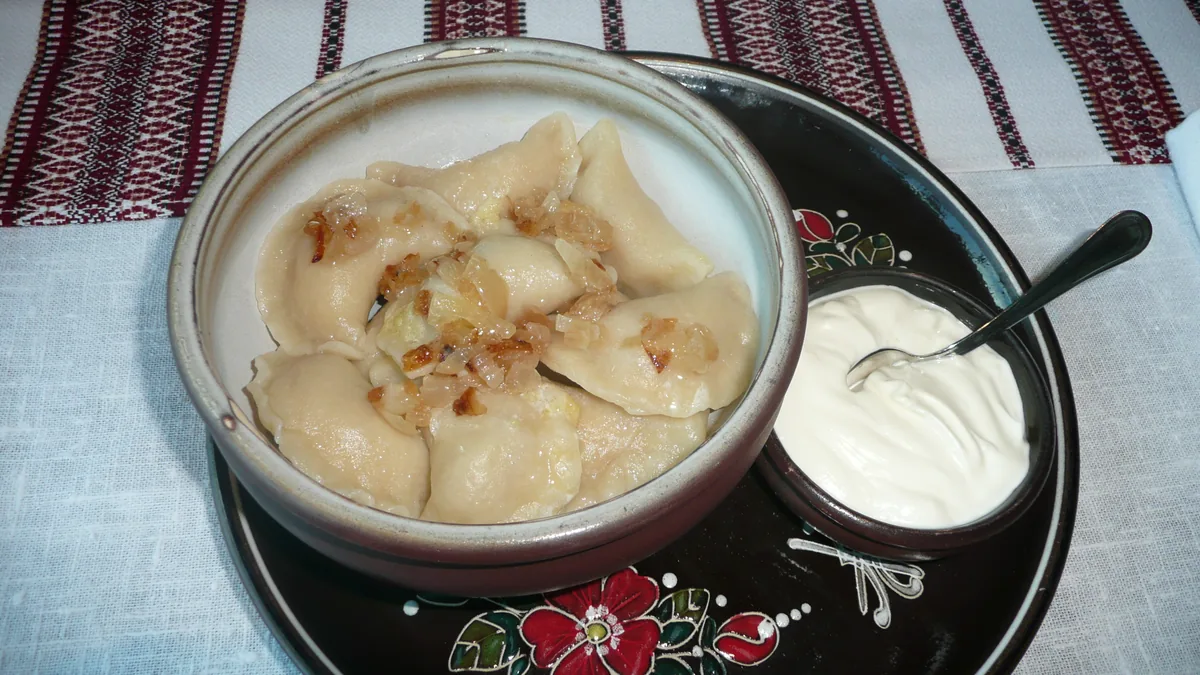
Calories per serving
| Serving | Kcal | P | F | C |
|---|---|---|---|---|
| 100 g | 149 | 4.3 | 3.6 | 24.9 |
| 1 dumpling, 25 g | 37 | 1.1 | 0.9 | 6.2 |
| Serving, 10 pieces, 250 g | 373 | 10.8 | 9.0 | 62.3 |
| Large serving, 350 g | 522 | 15.1 | 12.6 | 87.2 |
Your plate isn't the average one
The table shows an average recipe. Take a photo of your serving: we'll work out the ingredients, macros and FoodMate Score of exactly that plate. Free, no sign-up, the photo isn't stored.
Drop a food photo here
Or choose a file from your computer. A regular top-down photo of the plate in daylight works best.
Ingredients and how we count
We break the dish down by ingredient instead of taking an average “by name”. Below is a typical 242 g serving.
| Ingredient | Weight | Kcal |
|---|---|---|
| Dough (flour, water) | 110 g | 242 |
| Mashed potato with onion | 130 g | 117 |
| Oil for frying the onion | 2 g | 18 |
FoodMate Score of the dish
How it changes with different cooking methods
| Version | Serving |
|---|---|
| With potato, plain | 373 kcal |
| With 2 tbsp of 15% sour cream | 423 kcal |
| With onions fried in oil | 480 kcal |
| With cabbage | 325 kcal |
| With cottage cheese | 500 kcal |
| With cherries | 475 kcal |
Micronutrients
Values for a standard serving, as a percentage of the daily value for an adult.
| Nutrient | Per serving | % DV |
|---|---|---|
| Potassium | 520 mg | 15% |
| Vitamin B6 | 0.4 mg | 24% |
| Iron | 1.8 mg | 13% |
| Magnesium | 38 mg | 10% |
| Vitamin C | 9 mg | 10% |
How many calories are in potato vareniki
100 g of boiled potato vareniki contain about 149 kcal: 4.3 g of protein, 3.6 g of fat and 24.9 g of carbs. A medium dumpling weighs 25 g and gives about 37 kcal. A serving of 10 pieces is 373 kcal, roughly 19% of a daily 2,000 kcal. For comparison, the same weight of pelmeni has almost 1.5 times more calories because of the meat filling.
What adds the most calories
The dumplings themselves are fairly light; the calories come from how they are served. A tablespoon of oil with fried onions adds 100–120 kcal, pork cracklings add even more, and two spoons of 15% sour cream add about 50 kcal. If you like vareniki the traditional way with cracklings, count them as a separate dish: the total easily exceeds 600 kcal per serving.
Vareniki with different fillings
Potato is the middle ground. Cabbage vareniki are about 20 kcal per 100 g lighter, cottage cheese ones have more calories but twice the protein, and with cherries or strawberries almost all the extra comes from sugar. If you want to stay full longer, go for cottage cheese or potato with mushrooms: protein and fiber keep you satisfied better than a sweet filling.
Vareniki on a diet
A serving of potato vareniki without a fatty topping stays under 400 kcal and fits into a calorie deficit. The weak point is protein: only 10.8 g per serving. So pair vareniki with something protein-rich, such as a glass of kefir, a salad with egg or a piece of baked chicken, and swap fried onions for onions braised in water.
How to count your plate
Homemade vareniki can be tiny or palm-sized, with thin or thick dough, so the table value is a guide. The easiest way is to count pieces and remember about 35–40 kcal for a medium dumpling. Or take a photo of the plate in MyFoodMate AI: the app accounts for both the dumplings and the onion and sour cream.